
Should You Use ChatGPT in Your Business?
The Real Do’s and Don’ts of Using AI as an Entrepreneur
Over the past year, one of the most common questions I hear from clients and colleagues is simple:
“Should I be using ChatGPT in my business?”
It’s usually followed by a few other questions.
Is it legal?
Am I plagiarizing something without knowing it?
Is using AI cheating?
Will it replace real creativity?
These are thoughtful questions, and honestly, they’re good ones. Any time a new technology changes the way we work, it’s smart to pause and ask how it should be used responsibly.
The short answer is this:
Yes — AI tools like ChatGPT can be incredibly helpful for businesses.
But like any tool, they work best when you understand how to use them wisely.
Let’s talk about what that actually looks like.
Why Entrepreneurs Are Turning to ChatGPT
Running a business means juggling a lot of responsibilities.
Marketing.
Client communication.
Research.
Content creation.
Planning.
Documentation.
For many small businesses, there simply aren’t enough hours in the day.
That’s where tools like ChatGPT come in.
Used properly, AI can help you:
• organize ideas
• summarize information
• draft marketing content
• outline strategies
• turn notes into structured plans
• brainstorm new ideas
What it cannot do is replace your expertise, judgment, or experience.
Think of ChatGPT less like a replacement for thinking and more like a very fast research and writing assistant.

The First Question Most People Ask: “Should I Use ChatGPT in My Business?”
For most entrepreneurs, the answer is yes — with the right expectations.
ChatGPT is particularly helpful for things like:
• outlining blog posts
• drafting email newsletters
• generating social media ideas
• summarizing long documents
• organizing messy notes
• brainstorming marketing campaigns
In other words, it’s incredibly good at helping you move from a blank page to a structured idea.
What it doesn’t do is replace the strategic thinking that comes from years of experience in your industry.
The businesses using AI most effectively today aren’t the ones letting it run everything.
They’re the ones using it as a support tool for their expertise.
The Legal Question: “Does Using ChatGPT Violate Copyright Laws?”
This is one of the biggest concerns people have, and it’s understandable.
The good news is that using ChatGPT as a writing or research assistant does not violate copyright laws. However, like any tool, it should be used responsibly. Here are some guidelines that professionals generally follow.
DO use ChatGPT to help generate drafts.
It’s perfectly appropriate to use AI to:
• outline articles
• create marketing ideas
• summarize research
• generate writing drafts
DON’T copy other people’s work directly.
Just like with Google research, you should never copy someone else’s copyrighted content and claim it as your own. In using ChatGPT, your role is still to review, edit, and shape the final work.
DO add your own perspective.
This is where real value comes from. Your experience, voice, and insight are what make the content meaningful. AI can help you start — but the final message should still sound like you.
BOTTOM LINE: Using ChatGPT as a writing or research assistant does not inherently violate copyright laws, but it can carry significant risk. While users generally own their outputs, ChatGPT can occasionally generate content that is too similar to its training data, leading to potential infringement. Using it for brainstorming or editing is safer than generating long, direct, and non-modified content.

Another Question I Hear Often: “Is It Cheating to Use AI for Graphics or Content?”
This one makes me smile a little.
When Photoshop was introduced decades ago, people asked the same question.
When Canva launched, people asked it again.
Every new creative tool raises the same concern: Does this replace creativity?
Of course NOT!
Tools don’t replace creativity — they expand it.
Using AI to generate graphics, illustrations, or visual concepts is simply another way of working faster and exploring ideas more efficiently.
What matters most is how you use the tool.
If you’re using AI to generate ideas and then refining them with your own creative judgment, you’re doing exactly what good designers and marketers have always done – you’re using tools to bring ideas to life!
The Real Do’s and Don’ts of Using ChatGPT
If you’re considering using AI in your workflow, here are a few practical guidelines.
DO Use ChatGPT to Organize Your Thinking
One of the best uses of AI is turning messy ideas into structured plans.
You can use it to:
• organize brainstorming notes
• create project outlines
• structure marketing plans
• turn conversations into action steps
It’s incredibly helpful for turning information into clarity.
DO Use It for First Drafts
Many business owners struggle with starting content.
AI can help generate a starting point for things like:
• blog posts
• email campaigns
• social media posts
• presentation outlines
From there, you refine the message so it sounds like your brand.
DON’T Publish Without Reviewing
AI is fast, but it isn’t perfect.
Always review and edit content before publishing.
Check for:
• tone
• accuracy
• clarity
• brand voice
This step is essential.
DO Use It for Research Summaries
ChatGPT can help summarize complex topics quickly.
For example, you might use it to:
• outline industry trends
• summarize long reports
• gather talking points for presentations
It’s a powerful tool for processing information quickly.
DON’T Rely on It for Strategy
AI can generate ideas, but your business strategy should still come from your understanding of your audience and industry.
Think of AI as an assistant, not a strategist.
What AI Can’t Replace
One thing I want to emphasize is this:
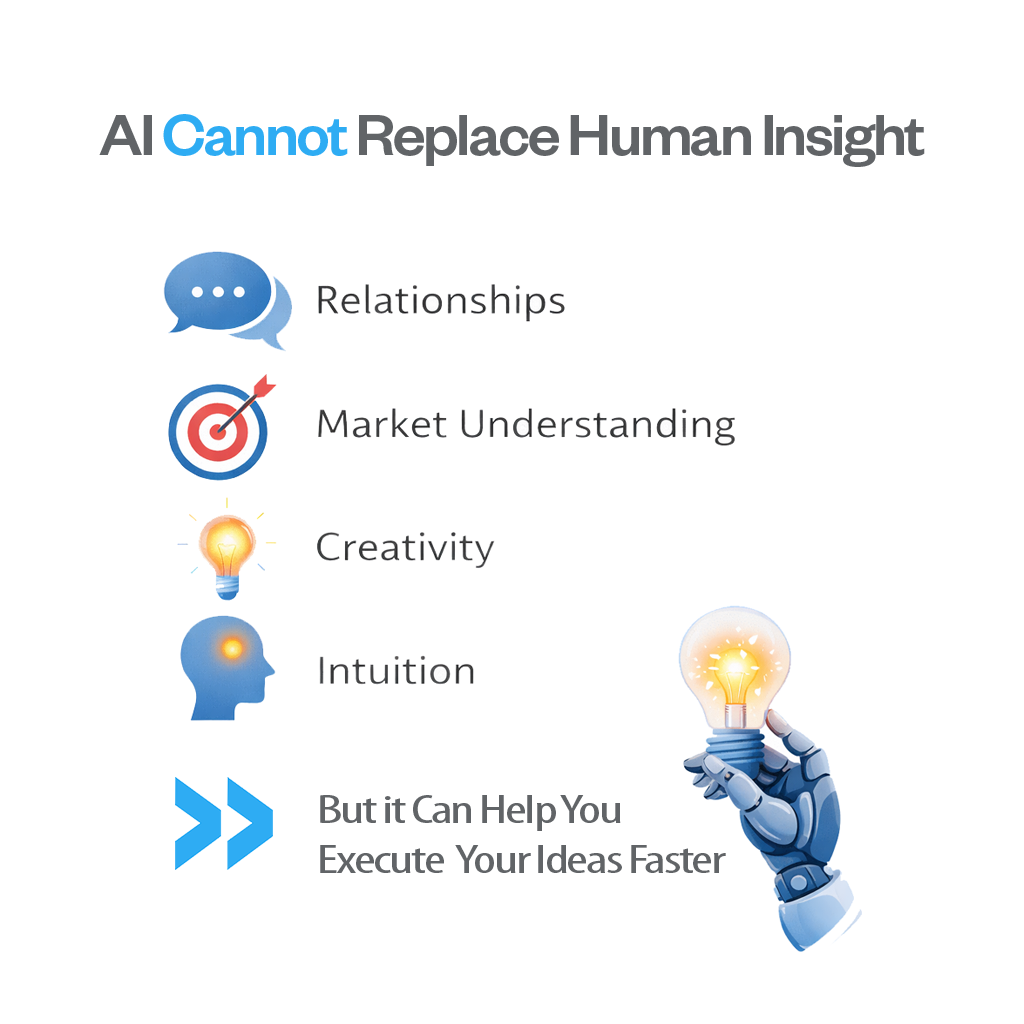
AI cannot replace human insight.
Your relationships with clients.
Your understanding of your market.
Your creativity.
Your intuition.
These things are built through experience.
AI simply helps you execute ideas faster.
Businesses That Benefit Most from AI
The entrepreneurs who are gaining the most from AI right now aren’t necessarily the most technical.
They’re the ones who are curious.
They’re experimenting with new tools and figuring out how those tools can make everyday tasks easier.
They’re asking questions like:
How can I organize my work better?
How can I create content more efficiently?
How can I free up time to focus on bigger priorities?
That’s where AI can make a real difference.
Final Thoughts
The conversation around artificial intelligence sometimes gets dramatic.
Some people worry it will replace creativity.
Others think it will solve every problem overnight.
The truth is somewhere in the middle.
AI is simply another tool — a powerful one — that can help entrepreneurs work more efficiently.
Used thoughtfully, tools like ChatGPT can help you:
• organize ideas
• streamline marketing tasks
• draft communication faster
• explore creative concepts
• reduce the time spent staring at a blank screen
But the most important ingredient in your business will always be the same.
You.
Your perspective, experience, and ideas are what turn tools into meaningful work.
And as entrepreneurs, learning how to use the right tools well is part of the journey.
(In a future article, I’ll share some practical frameworks for how small businesses are beginning to integrate AI into their daily workflow. If you’re curious about where this is heading, stay tuned.)